Home / Blog / Raised Paving Beside a Tree? Plan Winter Access Before Cutting Roots in Delta
Tree Care Planning
Raised Paving Beside a Tree? Plan Winter Access Before Cutting Roots in Delta
Woodpro Tree Services Ltd · · 5 min read
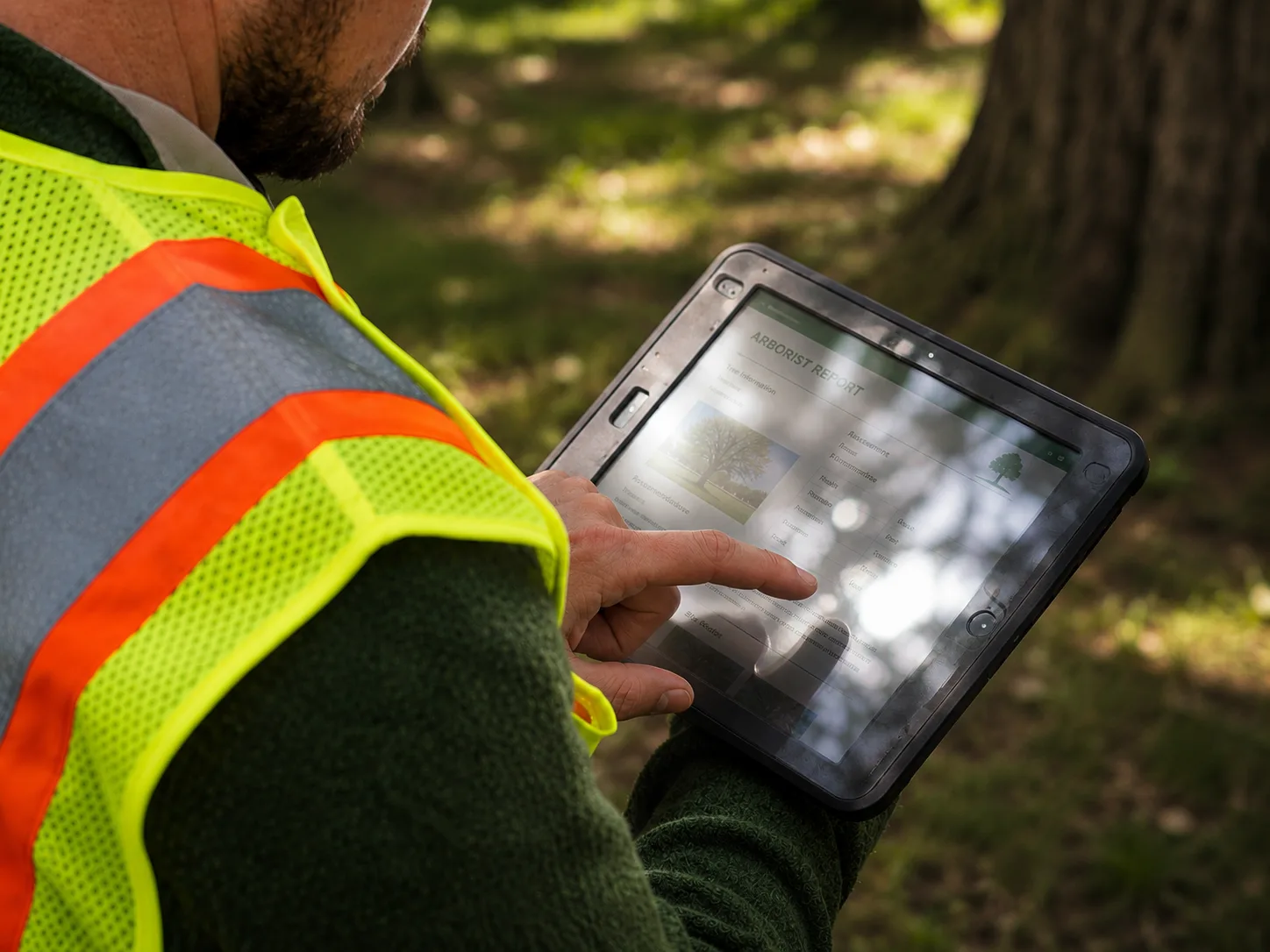
Uneven paving near a Delta tree? Plan winter access, clarify responsibility and discuss the repair with an arborist before roots are disturbed.
An uneven paving slab beside a tree can become a more pressing concern as you plan the route to the front door for late autumn and winter. The tempting shortcut is to lift the slab, remove whatever is underneath and put it back flat. Where roots may be involved, pause before that repair becomes root cutting.
For Delta and Metro Vancouver homeowners, the November question is practical: how can the walking route be addressed while the tree and proposed repair are reviewed together? A raised edge needs attention, but it does not by itself tell you which tree work, if any, is appropriate.
Describe the paving problem before naming the cause
Start with what you know. Is one slab higher than the next, are several pavers displaced, or is there a crack beside a visible surface root? Note whether you first noticed it recently or whether it has been present for years. A newly noticed edge is not necessarily new damage.
Explain who uses the route and whether it is the only access to the entrance, bins or parking. Mention mobility aids, delivery access and shared use where relevant. If the area is difficult to traverse, avoid it and arrange an appropriate alternative with the person responsible for the property rather than walking over it to collect more detail.
Photographs taken from an accessible position can show the tree, paving and nearby entrance in one view. Do not lift paving, dig beside the trunk or expose roots to make the enquiry more convincing.
Roots and paving need one assessment conversation
Iowa State University Extension's sidewalk guidance explains that roots growing beneath paving can enlarge and displace it. It also warns that removing major roots can harm tree health and structural stability.
That explains why “just cut the root” is not a routine paving instruction. The visible obstruction is only part of a living root system. This article cannot establish an acceptable cut from a photograph, root diameter or distance from the trunk.
Ask an arborist to review the tree concern before the repair method is fixed. Tell them whether a paving contractor has already proposed excavation, a new base or changed surface levels. If work has already exposed or damaged roots, stop further disturbance and describe what happened.
Ask about repair choices while the plan is still flexible
The same Iowa State guidance discusses changes to paving layout or construction as possible ways to accommodate roots. It also notes that surface repairs may be temporary while roots continue growing. These are options for a project team to assess, rather than a specification for a Delta walkway.
Ask the paving contractor and arborist what alternatives deserve consideration at your site. Could the route change? Would a different surface or design affect accessibility, drainage or the retained tree? Which proposals need further investigation before a quote is finalized?
Keep the questions connected. A repair that addresses one raised edge still needs to work for the people using the path. Likewise, replacing the visible paving does not settle what happens below it. Request a written description of the proposed excavation and finished surface so everyone reviews the same work.
Clarify responsibility before booking private work
A tree beside your front garden or a paved route near the street may involve City property. Do not use the fence, curb or position of the trunk as the only basis for assigning responsibility.
Delta's tree information says trees on City property must not be pruned, removed or damaged by residents. It also directs owners to understand tree-protection requirements before construction. Contact the City about a concern involving a municipal tree or public sidewalk, and ask what applies to the particular location and proposed work.
For a shared private route, involve the strata or property manager before arranging contractors. Our front-yard tree enquiry guide explains the separate ownership-routing question. A private quote does not establish authority to alter a public or shared asset.
Keep the winter access plan separate from the permanent repair
If the work will take time to assess, identify who will manage access in the meantime. Share the location of the uneven section with residents or the property manager and ask for an appropriate temporary arrangement. Do not improvise a loose board or pile of material over the obstruction.
Seasonal maintenance remains a separate task. Removing leaf litter or planning de-icer use does not level displaced paving, and a paving repair is not a diagnosis of the tree. Our winter walkway-care note covers nearby planting and salt exposure.
If drainage changes become part of the repair, include them in the tree review. Our drainage-project article explains what to bring before excavation is planned.
Bring Woodpro a defined tree question
A useful enquiry might say: “The paving beside our front-yard tree is uneven. We are discussing a repair and would like the tree assessed before the contractor decides how to excavate.” Add the property location, available photographs, known work history and any proposed repair description.
Woodpro provides tree health assessments in Delta and Metro Vancouver. Ask what the assessment will cover and whether a written report is appropriate. Paving design and installation need their own contractor and agreed scope.
Request a free estimate, call (778) 789-9452 or email info@woodpro.ca. Bringing the tree question forward before roots are disturbed gives the repair discussion a clearer starting point.