Home / Blog / Before You Buy De-Icer: Plan Walkway Care Around Trees in Delta
Tree Care
Before You Buy De-Icer: Plan Walkway Care Around Trees in Delta
Woodpro Tree Services Ltd · · 4 min read
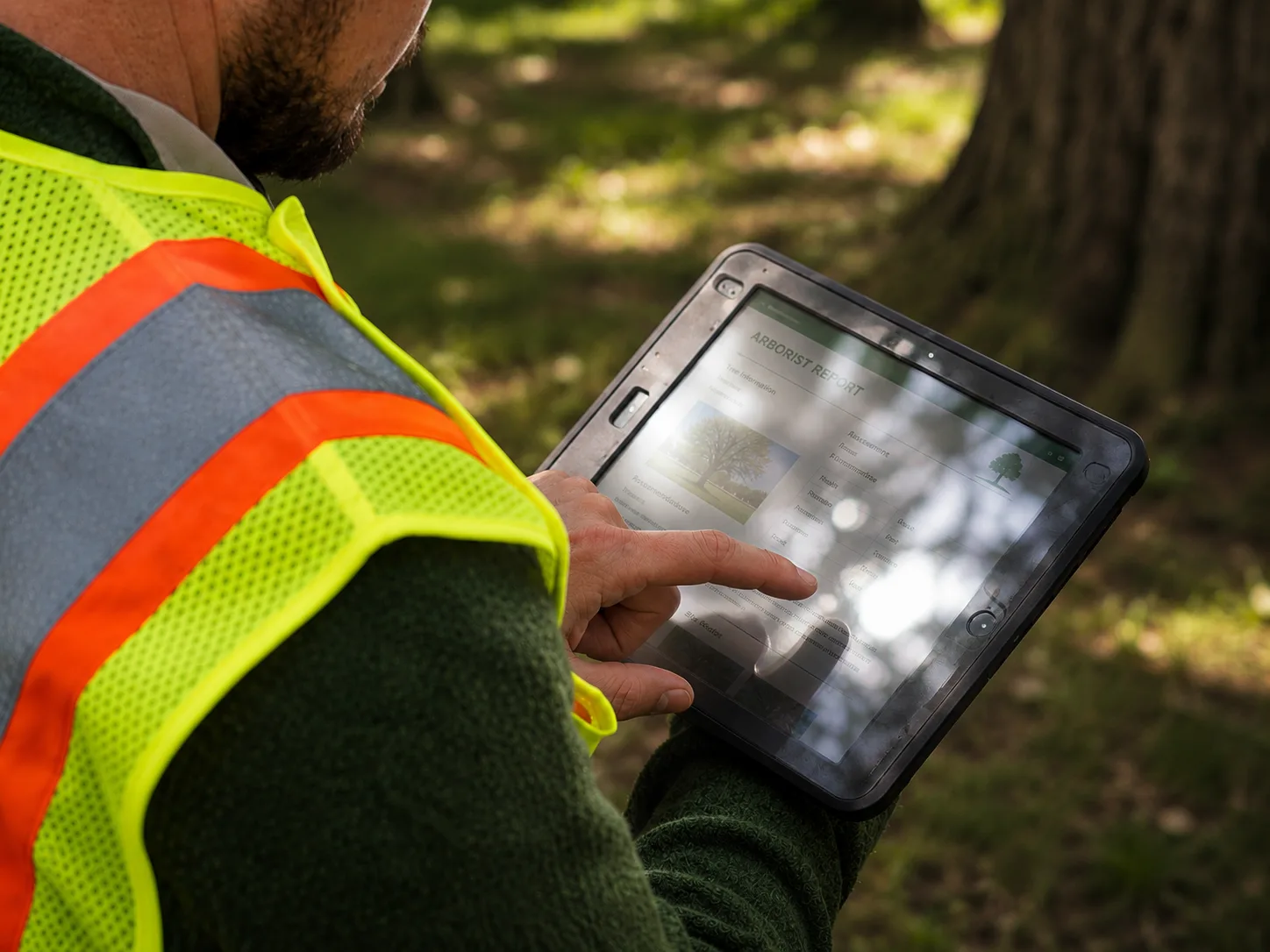
A November planning note for Delta homeowners: keep winter paths accessible while considering nearby trees, salt exposure and where cleared material will go.
A tree beside the front walk can be easy to overlook when buying winter supplies. Yet the strip between pavement and planting bed is worth including in a November maintenance plan. Before de-icing products are needed, decide who will maintain the route, where cleared material can go and how nearby trees will be considered.
For Delta and Metro Vancouver homeowners, this is preparation for the coming weeks, not a forecast of an imminent freeze. Keep pedestrian access central to the plan while reducing avoidable exposure of trees and shrubs to salt.
Start with the path people actually use
Identify the route from the sidewalk or parking area to the entrance, including gates, steps and shared access. On a strata property, put that route on the maintenance discussion rather than assuming every resident has the same understanding.
Note trees and hedges beside each section. A wide photograph taken from an accessible, stable position can show the relationship between the path and planting bed. Mark the location on a simple property sketch if the person arranging maintenance will not be there in person.
If low branches obstruct the route, describe that as a separate concern. Our driveway and walkway clearance article covers the pruning conversation. Buying winter supplies does not establish that a tree needs pruning.
Understand how salt can reach a tree
University of Minnesota Extension explains that de-icing salt can affect plants through root uptake and through spray contacting foliage. It also advises against depositing cleared snow onto nearby shrubs, because the material may contain salt or break branches.
For a homeowner, the useful planning question is where material from a treated path will end up. Identify a suitable destination before maintenance starts, accounting for access and nearby planting. Do not make the tree bed the automatic dumping place simply because it is beside the pavement.
Where a route and planting bed are tightly confined, explain that constraint to the person maintaining the property. A sketch showing the pinch point is more useful than a general instruction to “be careful around the trees.”
Agree on product use and leftover material
The City of Vancouver's sustainable salt guidance recommends removing snow first, applying salt only where needed for safety, distributing it evenly and cleaning up excess. It also stresses choosing a product suitable for the temperature.
Use that as a maintenance discussion, not a universal application recipe. Read the actual product label and agree who will follow it. Do not assume that extra material will compensate for a product being unsuitable for the conditions.
Include leftover granules in the plan: who will collect excess from dry pavement, and where will it be stored? Avoid sweeping it into planting beds. Keep packaging or a photograph of the label so the product can be identified later.
Keep an exposure history without diagnosing damage
If you are concerned about a tree beside a regularly treated route, note the product used, the location and when applications occurred. Include any known spills or repeated piles. Record what you know without guessing quantities.
University of Maryland Extension describes brown leaf margins, brittle brown needle tips and dieback among possible salt-injury symptoms. Those observations do not establish the cause of a particular tree's condition. A brown patch is not proof that winter maintenance caused it.
Keep older photographs if available, and describe when a change first appeared. Avoid choosing a fertilizer or other treatment from appearance alone. Ask about Woodpro's tree health assessments when a change needs professional review.
Finish the November plan with a clear scope
A useful handover can be short: identify the maintained route, nearby planting, product instructions, cleared-material destination and person responsible for checking the work. Keep it somewhere the next person doing the task can find it.
For local winter-maintenance information, consult Delta's snow and ice preparedness page. This article does not indicate current road conditions or a weather warning.
Woodpro's part of the conversation is tree care. If you have a tree-health concern or branches affecting access, request a free estimate and include your Delta or Metro Vancouver location and safe ground-level photographs. Explain the tree concern separately from the winter walkway-maintenance arrangement so the proposed work has a clear purpose.