Home / Blog / The Tree Beside Your Delta Front Yard: Who Should Receive the Enquiry?
Tree Care Planning
The Tree Beside Your Delta Front Yard: Who Should Receive the Enquiry?
Woodpro Tree Services Ltd · · 5 min read
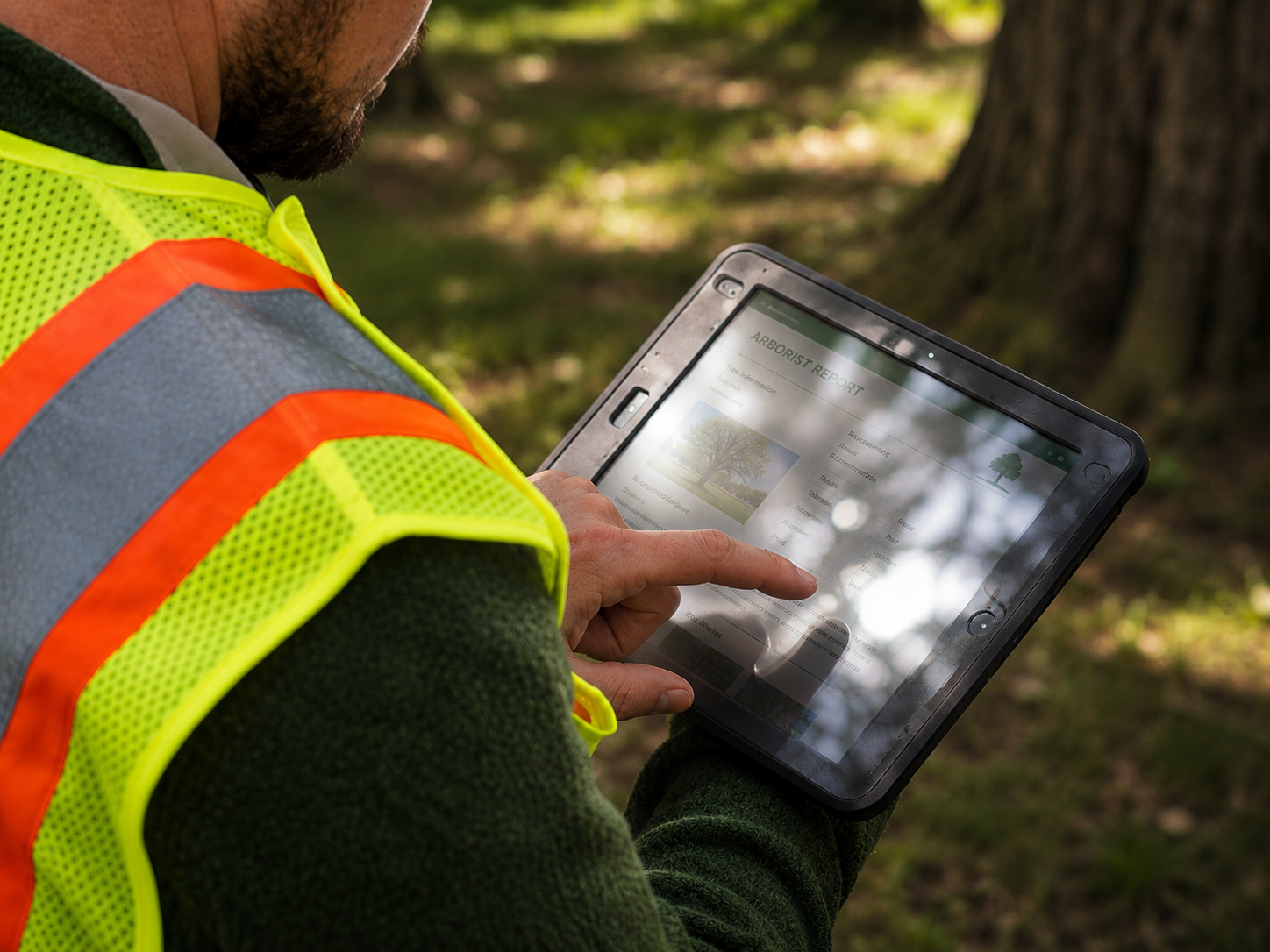
Before booking work on a tree beside your Delta front yard, clarify its location and send the enquiry to the right place: the City or an authorized private-tree contractor.
A tree beside the front lawn can feel like part of the garden, especially when its branches reach over the driveway. But before requesting a trim or removal, there is an earlier question: who should receive the enquiry?
For a Delta homeowner, the useful first step is to identify the tree and clarify whether it stands on private land or City property. That keeps a concern about leaves, shade or a particular branch from turning into a booking made with the wrong assumptions.
Describe the location before naming the work
Start with the street address and a plain description: “the tree beside the sidewalk, opposite our front door” is more useful than “our front tree.” If there are several trees, label them A, B and C in an existing photograph.
Separate the location from your concern. For example: “Tree A is beside the road, and its branches extend over the driveway.” That identifies what prompted the enquiry without deciding who owns the tree or which work should follow.
Use photographs you already have, or take a wider view only from somewhere safe. There is no need to climb, enter traffic or approach a concerning branch to make a first enquiry.
Use property information to frame the question
Delta explains that a municipal boulevard can sit between the roadway shoulder and a private property line. Its tree guidance points residents to DeltaMap and the aerial photograph layer as a starting point for checking a tree’s location. See the City’s tree guidance.
A continuous lawn or a familiar fence is not enough to settle the question. Treat “I mow beneath it” as background information, rather than confirmation that the tree is yours to authorize work on.
DeltaMap also has limits. The City says its mapping is approximate, intended for illustration and unsuitable for site-specific decisions. Use it to orient an enquiry, not to establish a legal boundary or permission to cut. Read the DeltaMap information and disclaimer.
If the location remains unclear, ask the City what clarification is needed. Where a precise boundary matters, seek suitable professional boundary clarification rather than estimating a line across the lawn.
Send City-tree concerns to Delta
Delta directs residents not to prune or remove City trees. Requests about those trees go to the City’s Engineering Department through its online service request or by calling 604-946-3260. The request should explain the reason. The current contact route is on the City’s Trees page.
Prepare a short account: the address, which tree you mean, what you observed and when. If you have contacted the City before, include that correspondence so the next person can follow the same enquiry.
Submitting a request is not a promise of removal. Delta says leaf or needle shedding, gutter debris, shade and blocked views are among the reasons it does not support for City-tree removal. Describe the concern accurately and let the City respond.
Keep uncertainty visible in the enquiry
You do not need to resolve every detail before asking the first question. It is better to write “ownership unconfirmed” than to call the tree private simply because it stands near your house.
A useful message could read: “I am asking about the tree beside the sidewalk at this address. I have attached a photograph showing its location. Please confirm whether this is a City tree and where this concern should be directed.”
If one person refers you elsewhere, keep that response with the enquiry. Avoid starting a second conversation that leaves out the uncertainty raised in the first. A clear record helps everyone discuss the same tree and the same question.
Bring an authorized private-tree scope to Woodpro
Once the tree is confirmed to be private, explain who can authorize the proposed work. If you are making the enquiry for someone else, identify the owner or organization involved rather than assuming your appointment request supplies permission.
For a pruning enquiry, describe the objective before choosing a technique. Woodpro offers tree trimming and pruning. If removal is being considered, explain why when discussing tree removal. Private ownership still leaves any applicable municipal requirements to be addressed before work proceeds.
Include existing City correspondence, relevant property information and your preferred outcome. Ask the quote to identify the tree and the agreed work clearly.
Make the next contact specific
Before sending, check that your message answers three questions: which tree, what concern and what is known about its location. Mark anything unresolved instead of filling the gap with a guess.
For a confirmed private tree in Delta, contact Woodpro with those details to discuss the appropriate pruning or removal scope. For a City tree, use Delta’s enquiry route. Clarifying that first makes the next conversation more useful.