Home / Blog / Planning a Drainage Trench? Put the Existing Tree on the Plan First
Tree Care
Planning a Drainage Trench? Put the Existing Tree on the Plan First
Woodpro Tree Services Ltd · · 5 min read
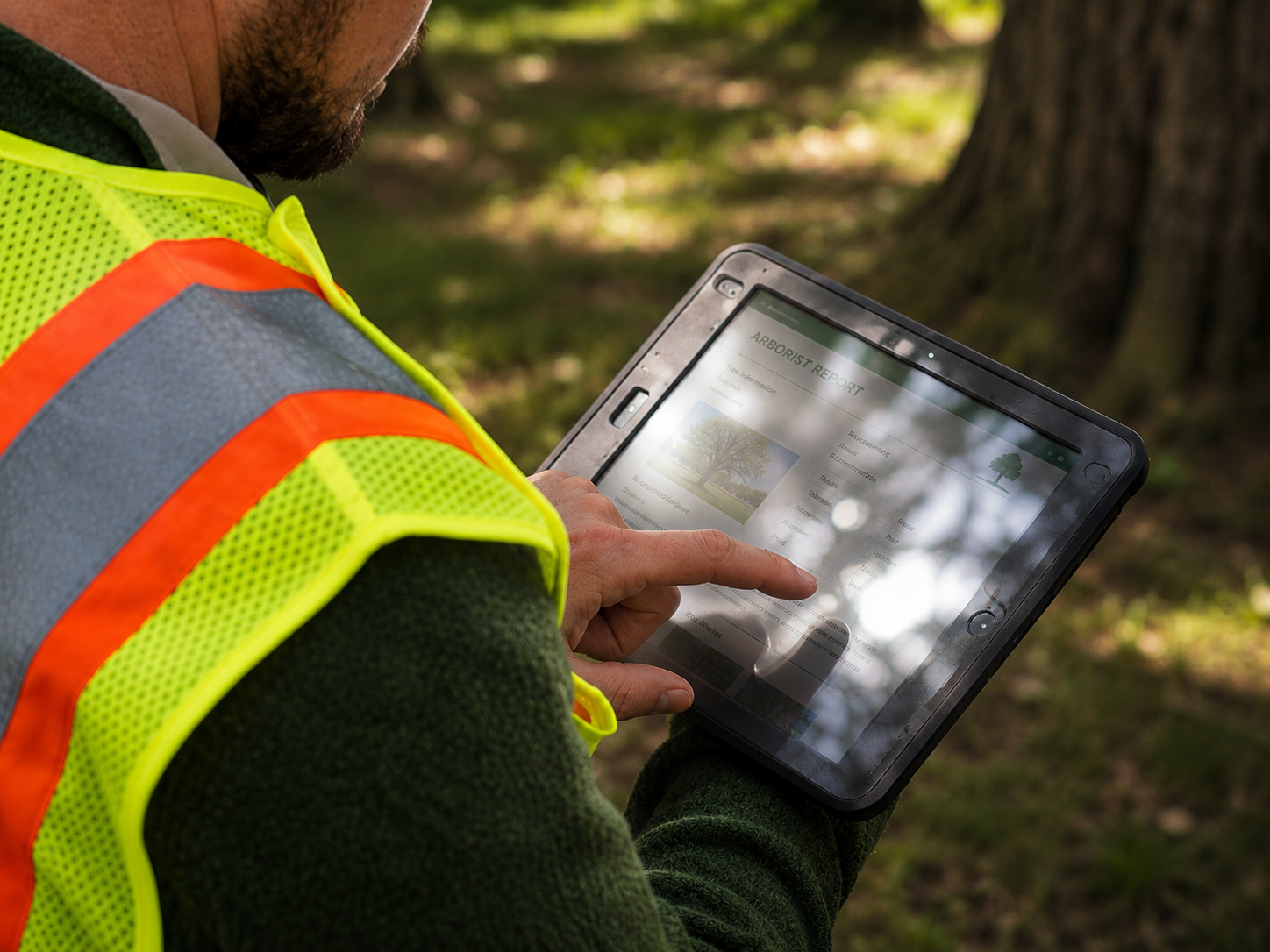
Planning drainage work near an established tree? Bring the route, access, storage and finished levels into the tree discussion before excavation begins.
A drainage project can begin with a simple aim: stop water collecting beside a path, patio or lawn. But if the proposed trench passes an established tree, include that tree in the discussion before the route is settled.
For a Delta homeowner, the useful first step is to bring the tree and the planned work onto the same sketch. That gives the people reviewing the project a clearer question than “Will this trench hurt my tree?” It also leaves room to adjust the plan before equipment arrives.
Show the tree alongside the proposed work
Start with a photograph or simple drawing that identifies the existing tree, the area where water collects and the route currently being considered. Mark nearby buildings, paths, fences and gates so the relationship is understandable.
Describe the drainage problem in ordinary terms. “Water remains beside the back step the following morning” gives a reviewer something specific to discuss. Include dated photographs if you already have them, and distinguish observations from assumptions about what causes the problem.
Keep uncertain details visible. If the route, excavation depth or outlet has not been determined, label it as undecided. A preliminary sketch is a conversation aid; it should not look like an approved construction plan.
Give roots a place in the design conversation
The International Society of Arboriculture explains that roots can extend beyond the canopy. Its construction guidance also identifies trenching, changes to drainage or soil levels, and soil compaction as potential sources of tree damage. A gap between the trunk and a proposed trench is therefore not enough to establish that the work is suitable. Read ISA’s construction guidance.
Bring the proposed work to an arborist while design choices remain open. Ask what information is needed to assess the interaction with the retained tree, and whether the route or other parts of the proposal need reconsideration.
A general article cannot give your tree a safe trench distance. Avoid using the edge of the branches, a neighbour’s past project or a reassuring photograph as clearance to excavate.
Include access and material storage
The trench line is only one part of the project. The same ISA guidance describes damage from machinery, compacted soil and material placed against the lower trunk.
Ask the contractor to show how equipment and materials would reach the work area. Where would excavated soil go? Where would deliveries be unloaded? Would an existing gate determine the route through the yard?
For example, a sketch might show the trench on one side of the garden while leaving the access route unmarked. Add that route before the tree discussion. Likewise, identify proposed storage areas rather than leaving “somewhere on the lawn” as an assumption.
These details help the project team review the whole proposal. They do not establish a suitable protection zone or approve a particular access arrangement.
Explain what the finished yard would look like
Include proposed changes to the surrounding surface, not just the underground pipe. Ask whether the project involves raising a bed, lowering part of the lawn, replacing paving or changing where water goes.
ISA recommends involving an arborist early in planning and incorporating tree requirements into project plans. Its guidance also warns that construction damage may take years to become apparent.
Keep the drainage designer’s questions and the tree questions connected. A proposed solution to standing water still needs review for its effects on the existing tree. Ask who will resolve those interactions and how agreed changes will reach the people doing the work.
If a drawing changes, make sure everyone is discussing the same version. A route revised in a phone conversation should not remain different from the drawing used for the quote.
Check Delta’s requirements for your project
The City of Delta’s tree information directs owners to check tree-protection requirements before construction. Its building and development section describes identifying retained trees on plans and establishing protection before work on development sites.
That development guidance does not mean every garden drainage trench follows an identical permit or reporting process. Ask Delta what applies to the particular property and proposed work. Explain whether the drainage work stands alone or forms part of a larger building or development project.
Include uncertainty about neighbouring or boulevard trees in that enquiry. Keep the question tied to the actual location rather than assuming the fence marks ownership or the limit of relevant roots.
Bring a clear request to Woodpro
Woodpro lists an Arborist report in its current tree services. Before booking, ask whether a report is appropriate for your project and what its agreed scope would cover.
Send your property location, photographs, preliminary route, proposed access and any questions received from Delta or your contractor. Identify which decisions remain open and when the project is expected to begin.
Contact Woodpro about your tree and proposed work. Putting the existing tree into the discussion early gives everyone a clearer starting point for deciding what needs review before excavation.