Home / Blog / Newly Planted Tree in Delta? Set Up Its First Wet-Winter Care Plan
Tree Planting
Newly Planted Tree in Delta? Set Up Its First Wet-Winter Care Plan
Woodpro Tree Services Ltd · · 5 min read
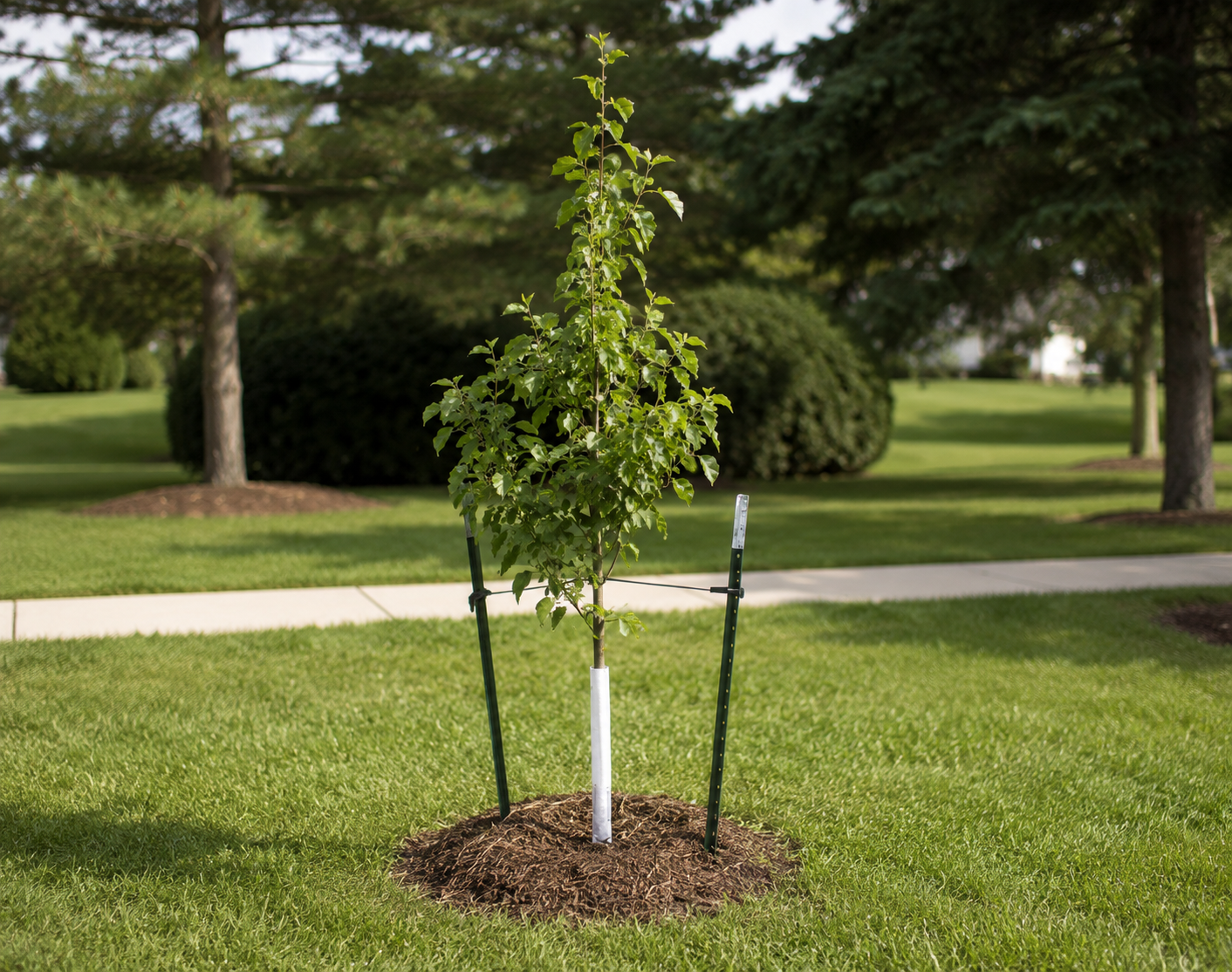
Plan a newly planted tree's first wet winter in Delta: clarify moisture checks, irrigation, wet-ground observations and who handles aftercare.
A newly planted tree can look settled as soon as the tools are packed away. Its first winter still needs a care plan. For a Delta homeowner heading from November into December, the useful question is who will check the tree and how decisions about water and follow-up will be made.
This note is for a tree already planted in the ground. If you are still choosing a location, start with our autumn planting and drainage guide. Here, the next step is a practical handover for the coming weeks, rather than a new planting design.
Recover the planting details first
Find the species name, planting date, nursery label and any written instructions. Keep the invoice and photographs from installation together. If you inherited the tree with the property, record what is unknown rather than estimating its age from its height.
Ask the installer which tasks remain with you and whether any return visit was included. A promise to supply and plant a tree does not, by itself, describe a winter maintenance arrangement.
The International Society of Arboriculture's planting guidance explains that transplanting can slow growth and reduce vitality, and that careful handling and follow-up care help recovery. A tree standing upright on planting day has not finished establishing.
Make the watering decision about the soil
A rainy afternoon does not give you a complete account of moisture around the new roots. Equally, a watering reminder left over from summer should not trigger an automatic soak throughout winter.
Iowa State University Extension's watering guidance explains that newly planted trees have limited root systems and that both insufficient water and excessive water can affect survival. Roots also need oxygen. Its discussion supports checking conditions before watering; its Iowa schedules are not a prescription for a Delta garden.
Ask the installer to show you an appropriate way to assess moisture at your tree's root ball and surrounding soil, and explain when to water or withhold it. Agree on that method before relying on a phone reminder. Do not dig exploratory holes through roots to investigate a wet patch.
Include irrigation in the handover
Tell the person advising you whether the tree receives water from a lawn sprinkler, a separate irrigation zone, a hose or a watering bag. Note whether that equipment is still operating and who can change its settings.
The same Iowa State guidance points out that turf irrigation and tree watering can conflict. Knowing that a sprinkler runs is therefore different from knowing that the new tree's needs are being met.
A useful instruction describes the equipment as well as the decision: who checks moisture, who responds, and who to contact if water repeatedly pools. If an irrigation contractor handles seasonal changes, give them the tree's care instructions. Ask how watering will be provided if needed after an automatic system is shut down.
Avoid treating extra water as a response to every change in foliage. Photograph the change and discuss it before changing several parts of the care routine at once.
Record wet ground without starting a drainage project
Over the next two to four weeks, note repeated ponding near the planting position, water arriving from a downspout or paving, or a change from earlier conditions. Record dates and take photographs from an accessible path. You do not need to go out during severe weather to gather evidence.
The USDA Forest Service Tree Owner's Manual hosted by Delta connects watering frequency with drainage and warns that water-saturated soil can deprive roots of oxygen. The manual was written for the northeastern and midwestern United States; use those general principles to frame a local review, rather than importing its quantities or schedule.
Standing water is an observation, not a diagnosis of why the tree looks different. Send the history to the installer or arborist before adding soil, changing levels or planning a trench. Our drainage-project planning note explains the separate discussion needed before excavation around a tree.
Give each follow-up task an owner
On a shared property, “the gardeners look after it” leaves several questions unanswered. Name the person who will check the tree, the person who will arrange advice and someone who can cover an absence.
Record any support or trunk guard in the handover and ask when it will be reviewed. Use our tree-tie and guard article for that focused question. If mulch is being refreshed, our existing-mulch review covers buildup and trunk contact. Those jobs need their own decisions rather than being bundled into an instruction to “winterize” everything.
If the tree changes position, a support fails or damage makes the area questionable, keep people clear and seek professional advice. Do not pull on the tree to test it or tighten an unfamiliar support to force it upright.
Bring a specific aftercare question to Woodpro
A helpful enquiry could say: “This tree was planted in September. We have the species and planting instructions, but need advice on repeated water around the planting area and who should review its care.” Add your Delta or Metro Vancouver location, dated photographs and any known irrigation changes.
Woodpro's tree planting service includes discussing aftercare responsibilities as part of the agreed work. For a concern about an existing tree, ask about a tree health assessment. Confirm what review or work is included for your situation.
Request a free estimate, call (778) 789-9452 or email info@woodpro.ca. A clear handover now gives the first winter a named caretaker, useful records and a route to advice when conditions change.