Home / Blog / Before You Plant a Tree in Delta, Watch the Yard After Rain
Tree Planting
Before You Plant a Tree in Delta, Watch the Yard After Rain
Woodpro Tree Services Ltd · · 5 min read
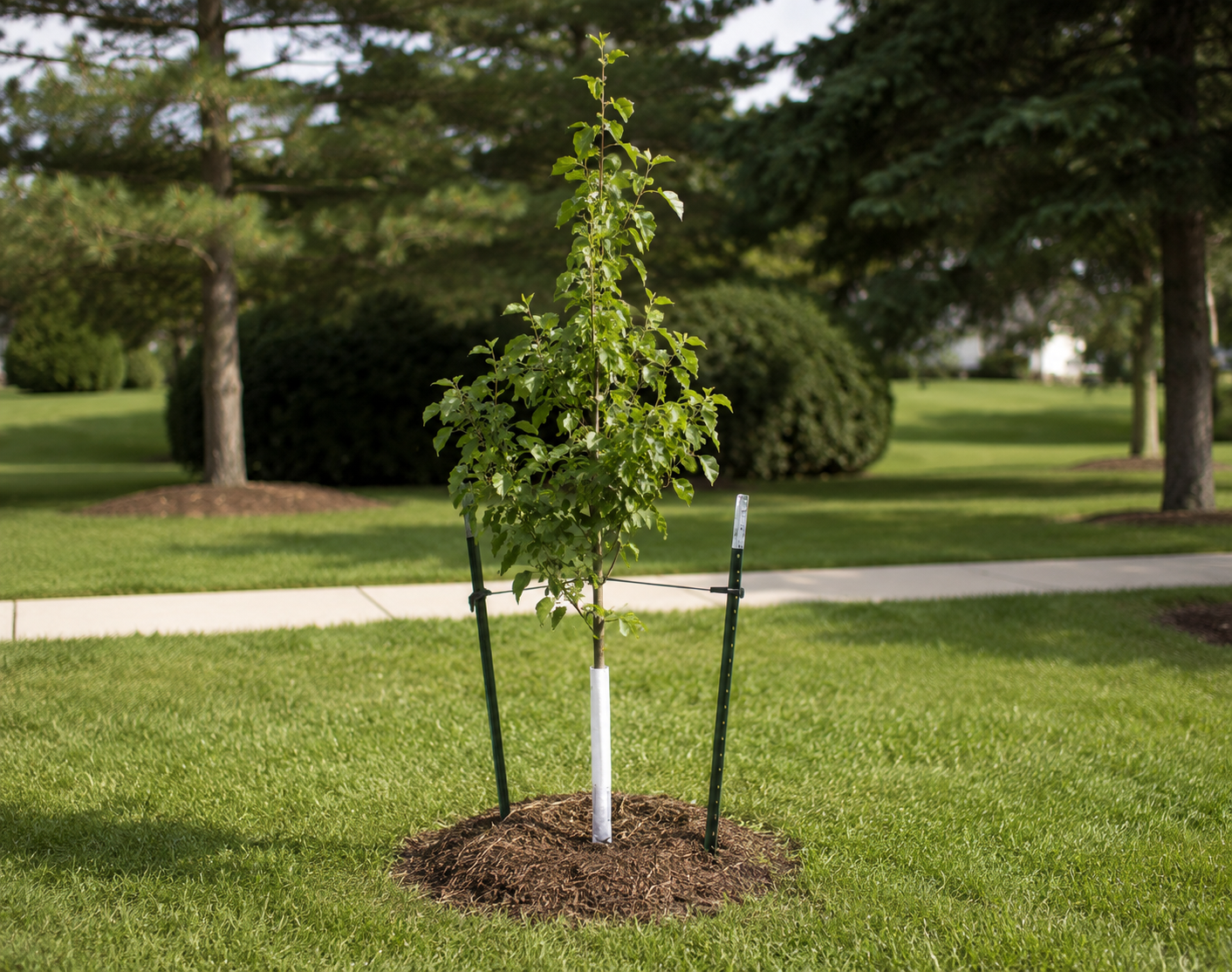
Before choosing a tree, record where rain collects, how much mature space is available, and what light, wind, boundaries and utilities may affect the site.
The tree you like at the nursery may not be the tree that fits the corner you have in mind. Before choosing a species this autumn, take a little time to watch that part of the yard after rain.
For a Delta homeowner, a few dated photographs and notes can make a planting conversation more specific. Where does water collect? How much room is available? What sits above, beside and beneath the proposed location? The aim is to bring useful observations to the decision, rather than diagnose the soil yourself.
Watch the proposed spot after rain
Photograph the area from a safe position after a rain event, then again later. Note whether water is standing in the same place, arriving from a paved surface, or moving toward the location you had chosen.
Include the date and a simple description: “Water remained beside the patio the next morning” is more helpful than “the whole yard has bad drainage.” If several rain events produce different results, keep those differences in your notes.
Surface observations do not identify soil texture, the cause of ponding or what lies underground. Avoid assuming that every Delta yard has clay soil or the same drainage conditions.
The International Society of Arboriculture identifies drainage as a tree-selection factor and explains that poor drainage can limit oxygen available to roots. See ISA’s tree selection and placement guidance. A repeatedly wet spot is worth discussing before a tree is selected for it.
Decide what you want the tree to do
Write down the main purpose: summer shade for a seating area, privacy from a particular window, flowers, or a feature visible from the house.
Be specific about where you want that benefit. A tree intended to shade the patio and a tree intended to screen a bedroom window may need different positions and forms. ISA includes both the intended function and mature form in its selection guidance.
This is also a useful moment to identify trade-offs. Which view matters? Which route must stay open? What would make the location inconvenient? Bring those priorities to the discussion before narrowing the choice to a favourite species.
Compare the space with the mature tree
From accessible ground, note nearby buildings, paths, driveways, fences, existing trees and overhead lines. Take a wide photograph showing the proposed spot in relation to those features.
Ask about the tree’s expected mature height and spread. Leave the conversation open to a different species or position if the original choice would not fit.
ISA’s planting guidance emphasizes placement in relation to utilities, sidewalks and driveways. The space decision involves the future tree as well as the size of the nursery container.
Include access needs such as a gate, a parking space or a regularly used walkway. If a property boundary is uncertain, record that uncertainty and have it clarified before the position is finalized. A fence or planting bed should not be treated as proof of a legal boundary.
Record sunlight and wind exposure
Tell the team what you have noticed about light at different times of day. Include shade from buildings and existing trees, rather than relying on a single photograph taken on an overcast afternoon.
Autumn observations are only part of the picture. If you know the area becomes much brighter or more shaded in summer, mention that too. Where you are unsure, say so instead of guessing a daily sunlight total.
Note whether the spot feels sheltered or exposed during ordinary weather; there is no need to go outside during a storm to collect observations. ISA identifies sun and wind exposure among the conditions to consider when selecting a tree.
These notes help frame a species-selection discussion. They do not substitute for checking what the chosen tree needs.
Plan utility checks before ground disturbance
Look for overhead lines from a safe location and mention them when discussing the tree’s mature size. For underground services, a visually empty patch of lawn is not sufficient evidence that the location is clear.
BC 1 Call’s homeowner guidance explicitly includes tree planting among projects requiring a locate request before digging. It also explains that non-member services need separate attention and that some utility owners do not identify private-property lines.
Ask who will coordinate the request and any additional private-line locating. A confirmation ticket is not clearance to excavate. Follow the utility owners’ responses and instructions before work proceeds.
Keep this as a planning step before planting; do not dig exploratory holes to investigate an uncertain location.
Bring the observations into the planting quote
You do not need a polished garden plan. A useful request can include your property location, the proposed tree position, the benefit you want, wide photographs and any uncertainty about drainage, boundaries or utilities.
Ask whether the site suits the proposed species and what must be resolved before installation. If drainage needs further assessment, clarify that separately rather than assuming a planting quote includes drainage construction.
Woodpro lists Tree Planting in its current services. Discuss the installation scope and any proposed soil inputs for your particular job; a planting service description is not a universal prescription for every yard.
Request a quote from Woodpro with your notes and photos. Watching the yard first can turn “I want a tree here” into a clearer discussion about which tree belongs there and what needs checking before it arrives.