Home / Blog / After Leaf Drop, Is Winter a Good Time to Prune Deciduous Trees in Delta?
Tree Trimming & Pruning
When Dormant-Season Pruning Helps a Deciduous Tree, and What to Leave Alone
Woodpro Team · · ~7 min read
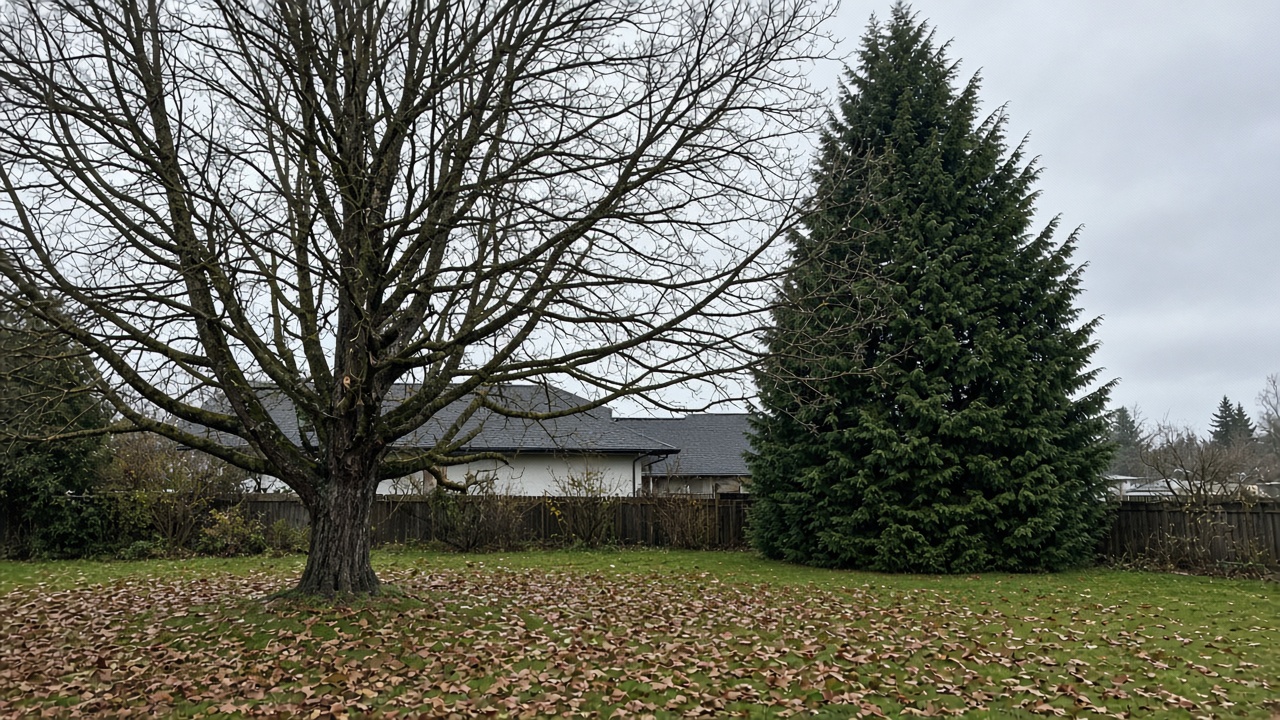
Late fall and winter, after leaf drop, is often a sound time to prune many deciduous trees in Delta. Which cuts fit that window, which trees differ, and when to call.
Every late October in Delta, Ladner and Tsawwassen, the bigleaf maples, birch, flowering cherry and oaks finish dropping their leaves. The wood is visible, and the November and December southeast gales are next.
What a bare maple shows after leaf drop is the ground-level look. When to prune an established tree starts with the reason, before a month is chosen. After leaf drop, late fall and winter often suit many deciduous trees here, and some species should wait.
Why the weeks after leaf drop often suit a deciduous prune
On this coast, dormant means the leaves are down and the tree is not pushing a spring flush.
The structure is readable. Crossing limbs, a second leader and a dead stub sit in the open, so a prune is easier to lay out. That view is not, by itself, a reason to cut.
A modest cut meets a quieter tree. The leaf sail is gone. A small live-wood cut now is usually easier on the tree than the same cut in late spring, after a new canopy has used stored energy.
Deadwood over a target is easy to point at. A dead limb over a bedroom, a walk or a play space shows once the leaves are gone. Taking it off before the southeast storms is a good use of this window.
Crews can work a mild, wet winter when the ground holds and the wind is down. A visit, and any work after a failure, is schedule- and weather-dependent. A sound oak that clears the roof can wait. We will say so.
What a dormant prune is actually for
"Prune it because it is November" is not a job.
Dead, broken and rubbing wood. Grey stubs that never leafed, a cracked hanger, limbs polished where they rub. Name a dead limb over a roof, drive or play space. Do not pull a hanger down.
A little clearance. A live lateral on the gutter, or one that will swing into the fence, can often come back to a side branch. That is tree trimming and pruning. The cut ends on living wood.
Structure on a young tree. One leader, with a competitor shortened or removed, is an easy choice while both stems are bare.
A shorter crown on a tree worth keeping is crown reduction rather than topping. We do not top, flush-cut, or lion-tail a crown by stripping inner wood and leaving tufts at the tips. If a request would do that, we will say so. A failing stem is tree removal, planned while the tree stands. Wood on the lawn is debris removal. Wood overhead is the pruning call.
What to leave alone
A sound bare crown. Live limbs with the leaves gone are a normal winter look.
Most of the live crown. If "making it safe" means taking a large share of the foliage wood in one winter, the plan is wrong. We will say so.
The ladder. A pole saw on soft ground, under a wet limb that can swing onto the shingles, tears bark and injures people. Photograph from the lawn.
Wound paint. Cut just outside the branch collar. Paint does not replace it, and a flush cut removes it.
Evergreens, City trees and wires. Douglas fir, western red cedar and hemlock still hold a full sail. A cedar hedge is its own job: a fall shape-up before the wet season. Do not prune or remove a boulevard or park tree. If a power or communication line is in the crown, stay back and say so.
Which trees do not follow the same habit
Most shade trees in a Delta yard can take a thoughtful dormant prune. A few groups are regular exceptions.
Maples, birch and walnuts can bleed. Cut as sap rises in late winter and the wound can drip for days. The Morton Arboretum calls that flow unsightly rather than harmful, and easier to avoid in the quieter part of winter or after the leaves are fully out. If a Ladner maple is already running sap in a warm February, wait on live cuts made for looks. Deadwood can still come off. Sap is not a reason to top.
Spring bloomers already hold next year's flowers. Flowering cherry, plum and magnolia set those buds last summer. A dormant tidy-up spends the blossom. If the flowers are the point, prune after they finish. A cracked limb over the walk can still come first.
Stone fruit in a wet month. Washington State University notes that silver leaf, a fungus of cherry, plum and other stone fruit, infects through wounds, and that these trees are least susceptible in dry summer and fall weather. We often postpone a November neatening of a healthy flowering cherry. Apples and pears in a home yard more often take a dormant structural prune.
A tree already in trouble. Fungi at the flare, soil lifted after rain, or an open stem are not fixed by a crown clean-up. A tree health report can sit with the pruning question. A prune will not close a crack.
Deadwood before the gales
Deadwood is what a southeast gale takes first. A dormant prune can remove it while the roof or the walk under it is easy to see. A few small dead twigs on a sound crown can wait. A cracked hanger cannot. Keep people out from under it. Storm response is schedule- and weather-dependent.
Bylaws differ, and a bare limb is not a permit
This is not legal advice. Cities here do not share one tree rule. In Delta, check the Tree Protection and Regulation Bylaw before removing or substantially pruning a private tree, and do not prune or remove City trees. Start at the City of Delta trees page and confirm the current rule with the City. Surrey, Richmond, Burnaby, Vancouver and the rest differ.
Dormant season does not exempt a large prune. Deadwood is not automatically exempt. Arborist reports and permits is how we prepare a report when a city asks for one. We do not predict the outcome or the timeline. Say so if the tree is on a strata lot or the line is unclear.
A dormant prune at a glance
| What you are considering | How the winter window usually fits | What to do instead |
|---|---|---|
| Deadwood or rubbing limbs on a maple, oak or similar shade tree | Often a fair dormant prune, after leaf drop | Photo it; skip topping |
| Maple, birch or walnut already running sap | Live cuts can wait; the drip is messy, not fatal | Hold appearance cuts until it stops, or until summer |
| Flowering cherry or plum, kept for bloom | A November tidy-up spends next spring's buds | Wait until after flowering unless a limb cannot |
| Apple or pear in a home yard | Often a fair dormant structural prune | Keep the live-wood cut modest |
| Douglas fir, cedar, hemlock or a cedar hedge | A bare maple does not set their timing | Keep the evergreen plan separate |
| Crack, cavity, or soil lifted at the base | Outside a routine prune | Assessment before any cut |
| City tree, or you are unsure who owns it | Leave it | Confirm with the City first |
When an arborist should make the call
Deadwood over a target. Roof, drive, play space or fence, on a tree that is otherwise sound. That is a dormant booking.
Two leaders on a young tree. A winter cut there pays off for years.
A bleeder or a spring bloomer. We would rather move the live cuts than cost you the flowers, or surprise you with a dripping maple.
A large cut, or wood over a roof. That may be a reduction or a removal. Photos start it. A visit decides it.
Trouble at the base, or no work at all. Fungi, a new lean or heaved soil need a different answer. A sound tree that already clears the house can wait. We will tell you.
What to ask for when you call
- Whole-tree photo from across the yard, bare crown against the house or fence.
- The limb you mean, from the ground, if one branch started the question.
- What the tree is for: shade, spring flowers, fruit, or a screen.
- A summer photo, if you have the same angle.
- Targets: roof, drive, play space, fence, or a line in the crown. Stay back from wires.
- City and ownership: Delta, Ladner, Tsawwassen, a strata, or a possible boulevard tree.
- The hope: deadwood, a little clearance, keep the flowers, or an answer on removal. Unsure is fine.
Book the work for a reason, not only for the month
Late fall and winter are often a good time to prune many deciduous trees in Delta. The wood is visible, a modest cut asks less than the same cut in the spring flush, and deadwood can come off before the storms. A bleeding maple, a flowering cherry, wet-weather stone fruit and every evergreen can wait.
Woodpro crews include ISA-certified arborists, work fully insured, and follow WorkSafe BC practices. We can tell you whether this bare crown is a dormant prune, a tree to leave until after flowering, or a job that should not be a prune at all.
Get a Free Quote, or call (778) 800-6791. You can also email a few photos of the whole tree and the limbs you are unsure about to info@woodpro.ca. We serve Delta, Ladner, Tsawwassen and communities across Metro Vancouver and the Lower Mainland.