Home / Blog / Young Tree with Two Main Stems? Plan Its Structure Before Winter in Delta
Tree Trimming & Pruning
Young Tree with Two Main Stems? Plan Its Structure Before Winter in Delta
Woodpro Tree Services Ltd · · 4 min read
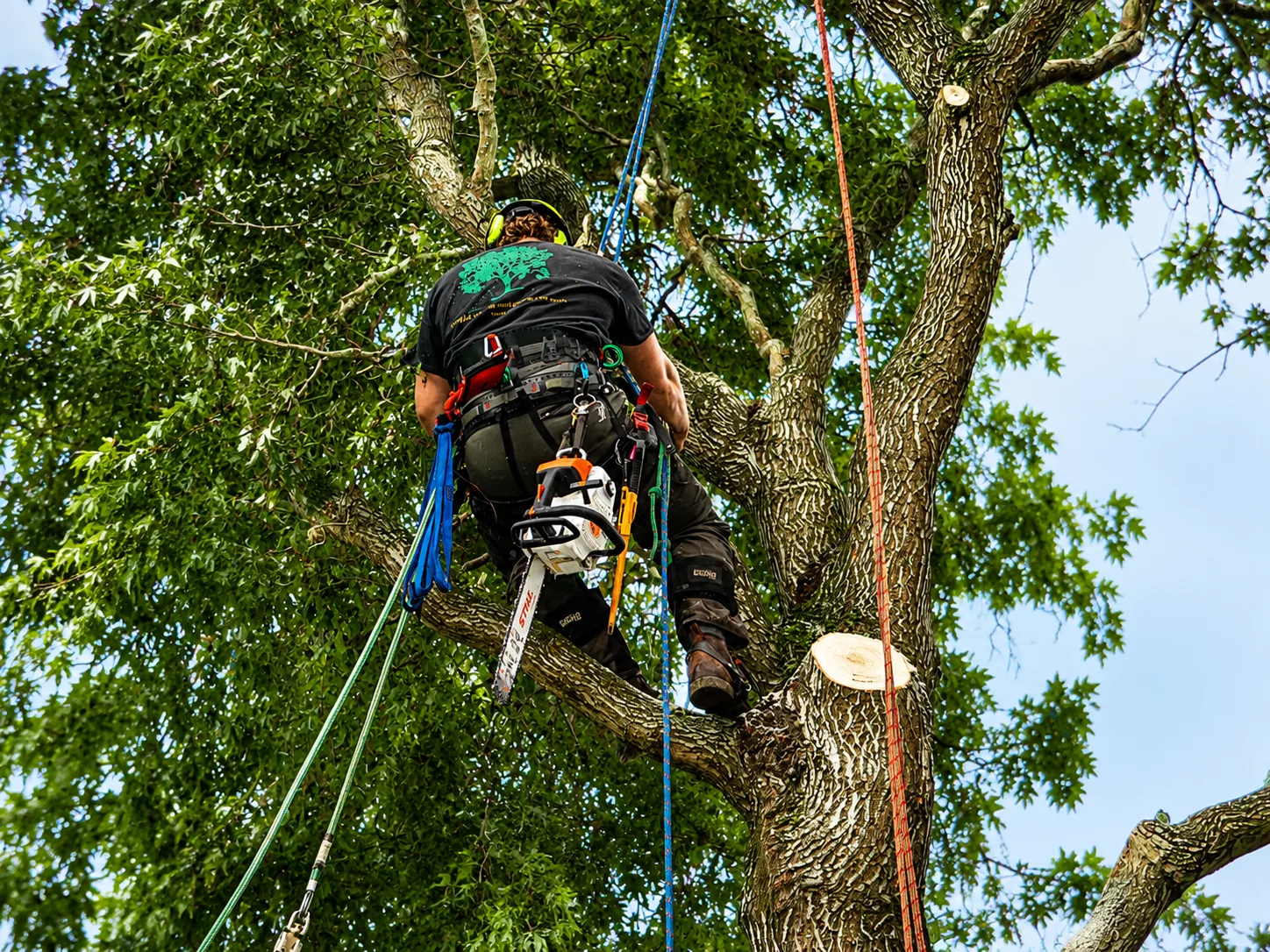
Two upright stems on a young Delta tree? Learn what to bring to an arborist, why natural form matters and when structural pruning may need stages.
A young tree with two upright tops can become much easier to notice as leaves thin or fall. For a Delta homeowner looking ahead to December, that is a useful question to bring to an arborist: are these competing main stems, or is this how the tree is meant to grow?
The next step is an assessment and a clear pruning objective. You do not need to decide which stem should go before asking for advice, and seeing a fork does not establish that the tree is about to fail.
Start with the tree's intended form
A leader is the main upward-growing stem. Two stems of similar size competing for that role are often called codominant stems. The International Society of Arboriculture's young-tree guide explains that these relationships can create structural weaknesses as a tree develops.
That does not mean every tree needs one straight trunk. Iowa State University Extension specifically distinguishes trees with a natural multi-stemmed habit from those being trained to a central leader. Identify the species and intended landscape form before treating a fork as a defect.
Find the nursery label, planting record or original landscape plan if you have one. Tell the arborist whether the tree was chosen for shade, flowers, screening or a particular shape. If its identity is unknown, say so rather than matching it to a photograph online.
Make a November observation without testing the fork
From an accessible ground-level position, record the whole tree and where the two upright stems begin. Include the path, seating area, building or boundary beside it. A photograph from last summer can help show the fuller crown.
The RHS guidance on formative pruning notes that winter can make deciduous branch structure easier to see. It also gives timing exceptions. Better visibility is a reason to discuss the tree over the coming weeks; it is not an instruction to prune every young tree in November.
Do not spread the stems apart, pull on them or climb for a closer view. If you notice an open split, a broken hanging branch or an apparent change in stability, keep people clear and seek prompt professional advice. Leave photographs you cannot obtain safely out of the enquiry.
Ask whether the work should happen in stages
Structural pruning concerns how branches and stems develop in relation to each other. It is different from trimming both tops to the same height for a neat outline.
Texas A&M Forest Service describes shortening or removing a competing stem while young and explains that retained side branches also contribute to trunk development. Those principles need applying to the actual tree, rather than turning into a homeowner cutting recipe.
Ask which stem the proposed work is intended to favour, what would be retained and what a later review would decide. Woodpro's structural pruning service includes assessing competing stems and considering a staged approach where needed.
A current quote should make clear whether it covers one visit or additional work. A future review is a separate commitment to confirm, not something to infer from the word “staged.”
Tell us if it was planted recently
A tree planted this autumn needs that history included before structural work is proposed. ISA's young-tree guidance treats newly planted trees separately and recommends deferring general pruning while they recover from transplanting, apart from dead or broken branches.
Bring the planting date, any damage at delivery and the installer’s instructions to the conversation. A tree can be young without being newly transplanted, so height alone does not answer the establishment question.
Avoid combining several appearance requests into one large intervention: removing a second top, clearing all low branches and making the crown smaller each changes the proposed scope. Ask the arborist to explain the priorities and limits together. Our first-winter care note covers the separate watering and aftercare handover.
Agree on a purpose, timing and finished result
A helpful request might read: “Our young front-yard tree has two similar upright stems. We would like advice on its developing structure and whether work should wait or be staged.”
Add what you know about previous pruning, the species and nearby structures. Mention shared ownership or anyone else who must authorize access. Show the route to the tree, including narrow gates, steps and ground conditions that may affect the visit.
Ask the estimate to identify the tree, the agreed work, the timing recommendation and full site cleanup. If branches or chips are to remain, record that preference. For the wider scheduling question, see our guide to pruning purpose and timing.
Woodpro Tree Services Ltd provides tree care in Delta and Metro Vancouver with ISA-certified arborists. Request a free estimate, call (778) 789-9452 or email info@woodpro.ca. A useful young-tree plan explains what should develop over time, as well as what work is appropriate now.