Home / Blog / Low Branches Over the Driveway? Fall Clearance Before Metro Vancouver's Dark Wet Season
Tree Trimming & Pruning
When Tree Limbs Block Driveways and Walkways: Fall Clearance Timing in Metro Vancouver
Woodpro Team · · ~7 min read
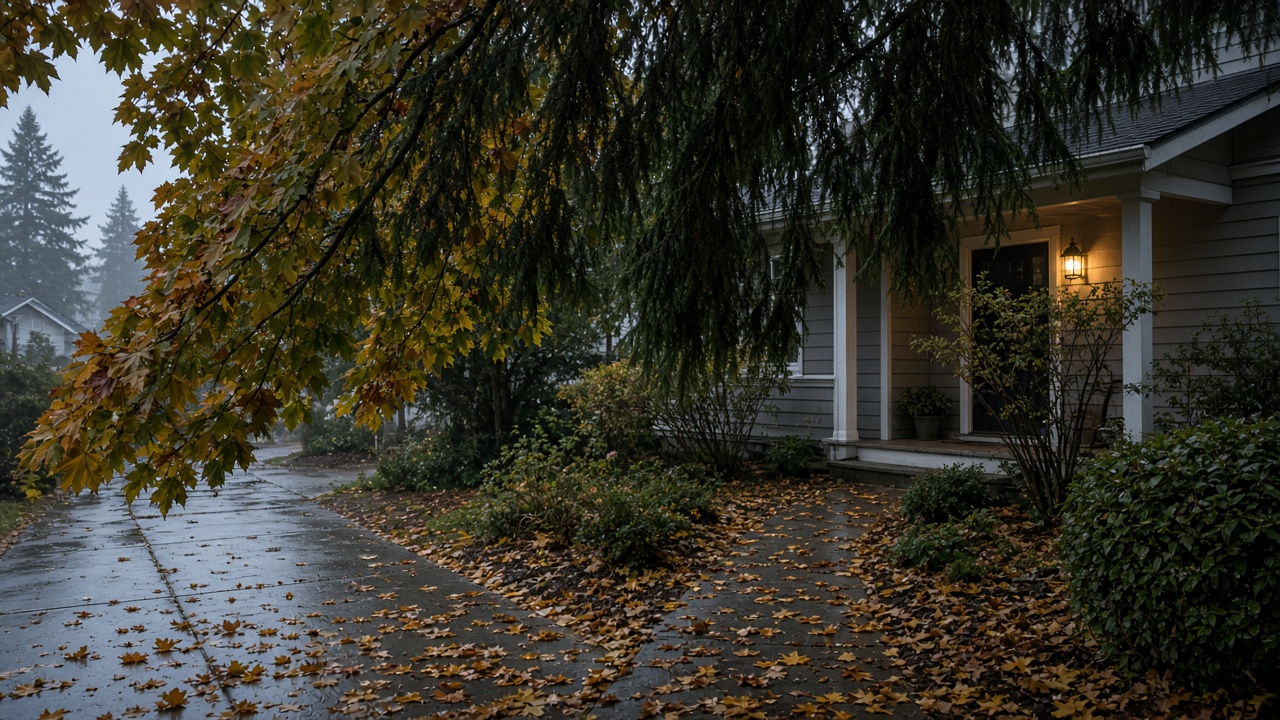
Branches blocking the driveway or walkway before wet dark evenings? Fall clearance pruning timing for Metro Vancouver homeowners.
Mid-October is when Metro Vancouver days get shorter and the first long wet stretches settle in. That is also when a lot of homeowners notice the same problem on the way to the car or the front door: low limbs hanging into the driveway, or branches that drip wet leaves onto the walkway every time it rains.
This is not the same job as clearing wood off a roof or gutters. Roof clearance pruning protects the building. It is also not power-line work, which belongs in a different safety conversation (power-line tree clearance). Driveway and walkway clearance is about the path of travel: vehicles, bikes, strollers, and people walking after dusk on wet pavement.
Why driveway and walkway clearance matters more in mid-October
Summer growth pushes soft tips lower. By October, what felt like “a bit close” in July can scrape a roof rack, brush a side mirror, or hang in a pedestrian’s face on the dark path from the sidewalk to the door.
- Dark evenings shrink reaction time. After dusk you see less of a low limb, especially if it is dark bark against a darker canopy.
- Wet leaves turn hard surfaces into a slip hazard. Maple and alder litter on a damp driveway or walkway is slick. Limbs that drip onto the same path keep feeding that mess for weeks.
- Vehicle clearance gets tighter when it matters. Delivery vans, taller SUVs, and roof boxes all need more vertical room than a compact car. A branch that clears a sedan may not clear a work truck.
- Storm wind loads long limbs sideways. A limb that sits just above the drive on a calm day can swing lower in a gust. That is related to broader storm prep and deadwood, but the target here is the driveway and walk, not the whole property.
Getting ahead of it before the wettest stretch fills every calendar is simpler than dealing with scrapes, slips, or blocked access after the first big storm.
What to check from the ground (no ladder needed)
Walk the full path of travel in daylight, then again near dusk if you can. Look for:
- Vertical clearance over the drive: limbs that would hit a roof rack, ladder rack, or tall van
- Side clearance: branches that brush mirrors, doors, or a pedestrian walking beside a parked car
- Walkway headroom: low laterals over the front walk, side path, or gate approach
- Sightlines at the sidewalk or alley exit: foliage that hides oncoming bikes, cars, or pedestrians when you pull out
- Leaf drip zones: limbs that hang over the wettest, most slipped-on section of pavement
- Dead or cracked wood over the path: different from routine low growth; hanging broken wood is covered in our widowmakers guide and should not wait
If you only notice the problem when leaves are down and lights are on, that is still useful information. Note which spots feel worst and photograph them from the driver’s seat and from standing height on the walk.
Prune or remove: a quick decision frame
Not every tree over a driveway has to come down. Clearance pruning is often enough. Removal enters the conversation when structure, lean, or decay make repeated pruning a poor long-term fix.
| What you see | Likely direction | Why |
|---|---|---|
| Healthy tree, a few low laterals into the drive or walk | Clearance pruning | Directional cuts raise the path of travel without gutting the tree |
| Dense crown edge blocking pull-out sightlines | Vista / clearance pruning | Selective openings restore sightlines; topping is not the answer |
| Repeated scrapes after past light tip cuts | Proper clearance pruning (not tip-nipping) | Short tip cuts bounce back; lasting clearance needs correct cut points |
| Major lean toward the drive, cracked stem, or large decay over the path | Assessment; often removal | Pruning may not fix a structural problem hanging over daily traffic |
| Dead hanging wood over the drive or walk | Priority hazard work | Treat as a drop risk, not a cosmetic trim. See widowmakers post |
An on-site visit from an ISA-certified arborist sorts those cases. Photos help for a first quote; a ground assessment confirms attachment, lean, and how much wood can come off without harming the tree.
How vista and clearance pruning works on a driveway job
Woodpro’s tree trimming & pruning service includes vista and clearance pruning for encroachments over driveways and sidewalks (as well as roofs and utilities when those are the issue). On a typical residential drive or walk job, a crew will usually:
- Walk the path of travel with you: vehicle height, walk routes, gate swings, and where you actually park.
- Mark what needs to lift or pull back: low laterals, drooping tips after rain, and foliage that blocks the sidewalk exit view.
- Make proper pruning cuts, not stubs or topping. Directional pruning raises clearance while keeping the tree’s structure sound.
- Separate hazard wood from clearance wood. Dead or cracked limbs over the path come out as safety work, not as optional “shape.”
- Chip and haul through debris removal so wet leaves and brush are not left to clog the same walkway you just cleared.
If the tree is failing and hangs over daily traffic, the conversation may shift to tree removal. That is a different scope than lifting a healthy canopy a few feet.
What not to do this fall
- Do not stand on a wet driveway with a pole saw over your head. Ladder-plus-rain-plus-traffic is a bad mix.
- Do not tip-nip the same branch every year and expect lasting clearance. Weak flush growth comes back denser and lower.
- Do not confuse hedge work with tree clearance. Cedar faces and privacy screens are a different service (cedar hedge trimming).
- Do not ignore sightline problems at the sidewalk. A branch that never hits the car can still hide a cyclist when you reverse out.
- Do not wait for the first scrape or slip if you already duck under the same limb every evening.
After a storm dumps wood on the drive
If wind already put limbs on the asphalt, clear people and vehicles first, then deal with the wood. Our post-storm debris cleanup guide covers triage when the mess is already on the ground. The point of mid-October clearance is to reduce how often that happens over the places you walk and drive every day.
What to send when you request a quote
- Address and municipality (Delta, Surrey, Richmond, Vancouver, and the rest of the Lower Mainland)
- Photos from the driver’s seat and from standing height on the walk, showing how low the limbs sit
- Vehicle notes if relevant: roof rack, tall van, frequent delivery trucks
- Where the slip or scrape risk is worst (gate, sidewalk exit, parking pad, side path)
- Whether the tree is on your lot or appears shared with a neighbour
- Access notes: parked cars under the drop zone, narrow side yards, strata rules if applicable
Pricing depends on tree size, how much wood needs to come off, access, and whether the job is pruning or removal. The fastest way to a clear number is to request a free quote.
One crew from assessment to a clear path
Woodpro handles driveway and walkway clearance as part of professional tree trimming & pruning, with removal when structure demands it, and full debris cleanup so the path is usable the same day. Crews include ISA-certified arborists, work fully insured, and follow WorkSafe BC practices.
Low limbs over the driveway before the dark wet stretch?
Raise the path of travel now, before shorter evenings and wet leaf litter make every trip to the car a duck-and-slip exercise.
Get a Free Quote, or call (778) 800-6791. You can also email a few driveway and walkway photos to info@woodpro.ca.
Woodpro Tree Services is based in Delta BC (North Delta, South Delta & Ladner) and serves Metro Vancouver and the Lower Mainland with tree trimming & pruning, tree removal, and debris removal. Scheduling depends on weather, access, and the current calendar.