Home / Blog / Snow or Ice Bending a Branch? A Before-Winter Plan for Delta Homeowners
Tree Care Planning
Snow or Ice Bending a Branch? A Before-Winter Plan for Delta Homeowners
Woodpro Tree Services Ltd · · 5 min read
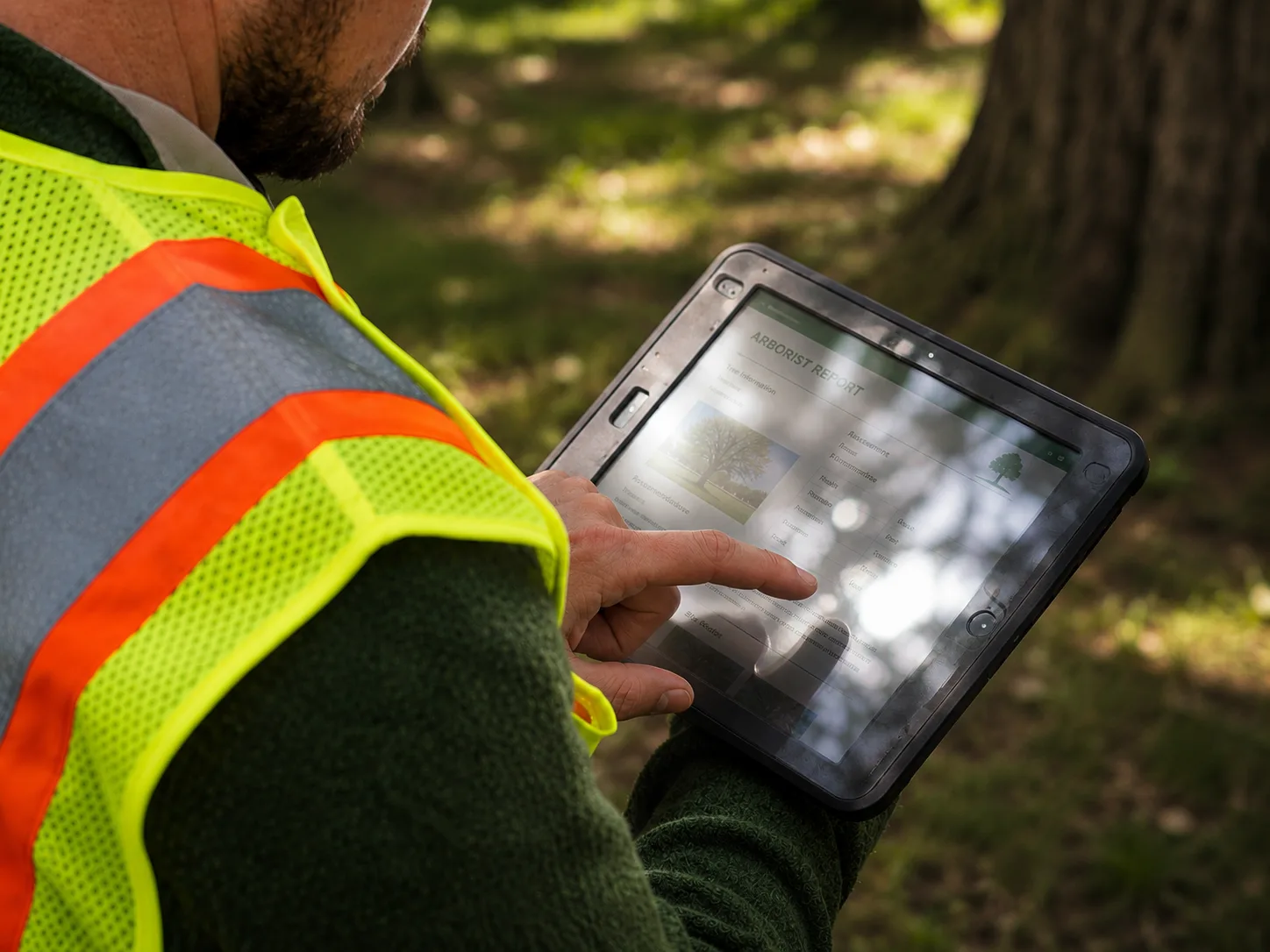
Prepare for snow- or ice-bent branches in Delta: keep clear, distinguish bending from visible breaks and plan access before choosing pruning or cleanup.
When a branch bends under snow or ice, the first question is often whether to shake it free, cut it back or leave it alone. For a Delta homeowner, the useful starting point is to keep people away from the loaded branch and separate a change in shape from visible breakage.
November is a good time to decide how you would handle an obstructed entrance or garden path before winter conditions arrive. This field note is preparation for the coming weeks, not a report of current snow, ice or a weather warning in Metro Vancouver.
A bent branch is a question, not a pruning instruction
Purdue Extension's winter-damage guidance advises against immediately pruning an undamaged limb simply to correct bending under snow or ice. Its position may change as the load disappears and the wood has time to respond.
That does not establish that your particular branch is intact or will recover. From a safe position, describe what you can actually see: a branch lower than usual, a visible break, or a piece caught in the crown. Do not approach to prove which description is right.
A photograph taken before winter can provide useful context later. If you already have one, keep its date and identify the tree. A different camera angle can change how a branch appears, so treat photographs as background for an assessment rather than a measurement of strength.
Leave shaking, pulling and ice removal out of the plan
NC State Extension's snow-and-ice guidance warns against shaking trees and shrubs. It advises patience with loaded trees and allowing frozen material that will not readily dislodge to melt naturally.
For a homeowner, that means leaving the branch alone while keeping clear of it. Do not strike ice with a tool, pull a branch with a rope or stand underneath to knock material loose. Do not climb or use a ladder for a closer look.
If the branch is over the only entrance, explain that immediately when seeking help. An access problem needs a practical arrangement for people as well as a tree-care decision. Do not force a route beneath the branch while waiting for advice.
Decide which access can wait
Before winter, identify another usable entrance if your main route passes beneath a tree or hedge. On a shared property, agree who will tell residents or visitors about a closed route and who will contact the property manager.
Consider deliveries, bin collection and the place children or pets normally pass. A route that can be avoided for a while presents a different access problem from the only way into the building. Share that information without treating it as a tree-risk rating.
Where branches already affect normal access without snow or ice, describe that existing concern separately. Our driveway and walkway clearance guide explains the pruning discussion. A winter access plan is not a reason to shorten every branch in advance.
Treat a broken or hanging piece as a separate concern
A branch that has broken but remains caught overhead needs professional attention. Keep people and pets clear, and report the location from somewhere you can remain safely. Do not pull the piece down or move underneath it to collect smaller debris.
Tell the arborist if you can see a fresh split, if a branch rests on a structure, or if the tree's position appears to have changed. Describe uncertainty plainly. Our hanging broken limb article covers that different situation in more detail.
Power lines change the response. BC Hydro directs people who encounter a downed or damaged line to stay at least 10 metres back and call 911. Do not approach a tree or branch touching a line, or attempt to clear access around it yourself.
Ask what needs assessment after the load has gone
When conditions allow a professional visit, explain the sequence: when bending was first noticed, whether snow or ice was present, and what looks different afterwards. Include any previous pruning or earlier damage you know about.
Ask whether the concern calls for a tree health and structural assessment, pruning, or further observation with a clearly agreed follow-up. A decision to observe should include what changes to report and who is responsible for the next contact.
If tree trimming and pruning is recommended, ask which tree and branches the estimate covers, why that work is proposed and how site access will be managed. Confirm full site cleanup and whether any wood will remain. Avoid assuming that a changed outline means the whole tree needs removal.
Woodpro Tree Services Ltd provides tree care with ISA-certified arborists in Delta and Metro Vancouver. Request a free estimate, call (778) 789-9452 or email info@woodpro.ca. Describe an access restriction at the start of the enquiry so the next step can account for both the tree and the people using the property.