Home / Blog / Keeping Wood After November Tree Work? Plan Before the Crew Arrives in Delta
Tree Care Planning
Keeping Wood After November Tree Work? Plan Before the Crew Arrives in Delta
Woodpro Tree Services Ltd · · 5 min read
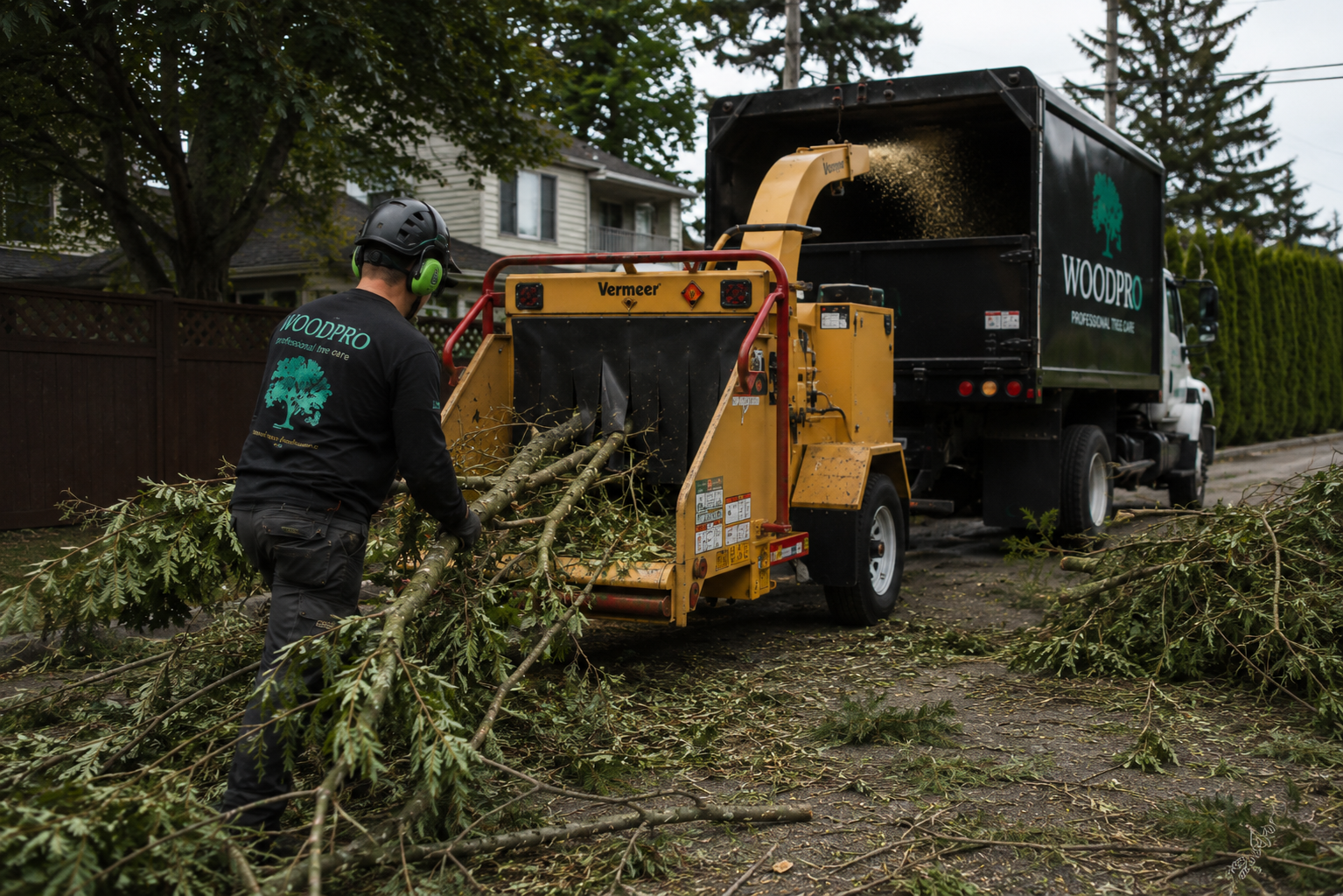
Want to keep wood after November tree work in Delta? Agree on handling, storage and cleanup, and check drying, local burning rules and firewood movement guidance.
Keeping some wood after November tree work can sound like a useful way to prepare for winter. Before asking the crew to leave the trunk, decide what you will actually keep, where it will go and who will handle the remaining preparation.
For a Delta or Metro Vancouver property, “leave the firewood” needs more detail than it first appears. A pile of fresh rounds is different from fuel ready for a fireplace, and retaining wood changes the cleanup agreement.
Decide what you want retained before work begins
Identify whether you want a limited amount of suitable wood, all larger pieces, or complete haulaway. Tell the contractor while the quote is being prepared so the decision can be included in the written scope.
Ask what form retained wood would take. Larger trunk sections, rounds, split pieces and stacked firewood describe different amounts of work. Do not assume cutting to a particular length, splitting, carrying or stacking is included. Woodpro's debris removal service covers branch and log hauling and on-site chipping where suitable; a request to retain wood needs its own agreed details.
If you only have room for a modest amount, say that early. Keeping every large piece can leave you with more material than you have a use or destination for.
Freshly cut wood is a future-use decision
Metro Vancouver's burning guidance recommends seasoned firewood dried for at least six months, with moisture content of 20 percent or less. It also describes preparation and covered storage.
That guidance makes a November retention decision different from buying ready-to-use winter fuel. Do not plan to burn wood immediately simply because the tree has been cut down. Nor should a calendar date alone be treated as proof that stored wood is dry enough.
Before keeping it, decide who will arrange suitable preparation and storage. Ask about the wood's condition rather than assuming every piece from the job will be suitable fuel. This article is a planning guide; it does not provide cutting, splitting or appliance-operating instructions.
Check the intended use before reserving the wood
An existing fireplace does not automatically make retained logs useful. Metro Vancouver's residential indoor wood-burning information sets out registration and best-practice declaration requirements. It also explains that fireplaces without emissions certification can only burn manufactured fire logs to qualify for registration.
Check the requirements for your particular device and location before deciding to keep natural wood. Follow the device manufacturer's fuel instructions and confirm any applicable local restrictions. Keeping logs on the property does not authorize burning them indoors or outdoors.
If you cannot identify a suitable, permitted use, complete haulaway may be the more practical request. Do not decide to retain a large quantity merely because disposal was the last item discussed.
Agree where the wood will be left
Choose the proposed location during the site discussion. Explain the everyday route to the entrance, gate and bins, and any shared access that must remain usable through the coming weeks.
Ask whether the crew can place retained material in that location and what handling is included. Do not reserve a spot that would require you to roll heavy rounds, lift awkward sections or enter an active work area later. Leave the crew's working area clear until they confirm access is appropriate.
Keep the storage discussion separate from the work method. The contractor needs to decide how the tree work and material handling can be carried out. Our autumn access and storage note explains why nearby retained trees also belong in that conversation.
Do not make a distant giveaway the fallback plan
The Canadian Food Inspection Agency's firewood guidance warns that insects and other pests can travel in wood and bark, even when they are not visible. It recommends local sourcing and use, and checking movement restrictions.
If your plan depends on a friend taking the wood to a cabin or campsite, check the applicable restrictions before offering it. A tidy-looking piece is not evidence that transport is appropriate. Tell the contractor about any known pest concern rather than choosing a destination yourself.
For material you do not retain, our branch-pile disposal article covers the separate collection and haulaway questions. Municipal acceptance rules need checking for the actual material.
Put the finished result in the quote
A useful instruction might be: “We would like to keep a small amount of suitable wood in the agreed area, with the rest removed; please confirm the size and handling included.” The contractor can then explain what is feasible and price the actual scope.
Woodpro Tree Services Ltd provides tree care and debris removal in Delta and Metro Vancouver. Request a free estimate, call (778) 789-9452 or email info@woodpro.ca. Include your retention preference before the visit so tree work, cleanup and any wood left behind can be discussed together.