Home / Blog / Already Have a Tree Cable? Plan Its Next Inspection Before Winter in Delta
Cable Bracing
Already Have a Tree Cable? Plan Its Next Inspection Before Winter in Delta
Woodpro Tree Services Ltd · · 5 min read
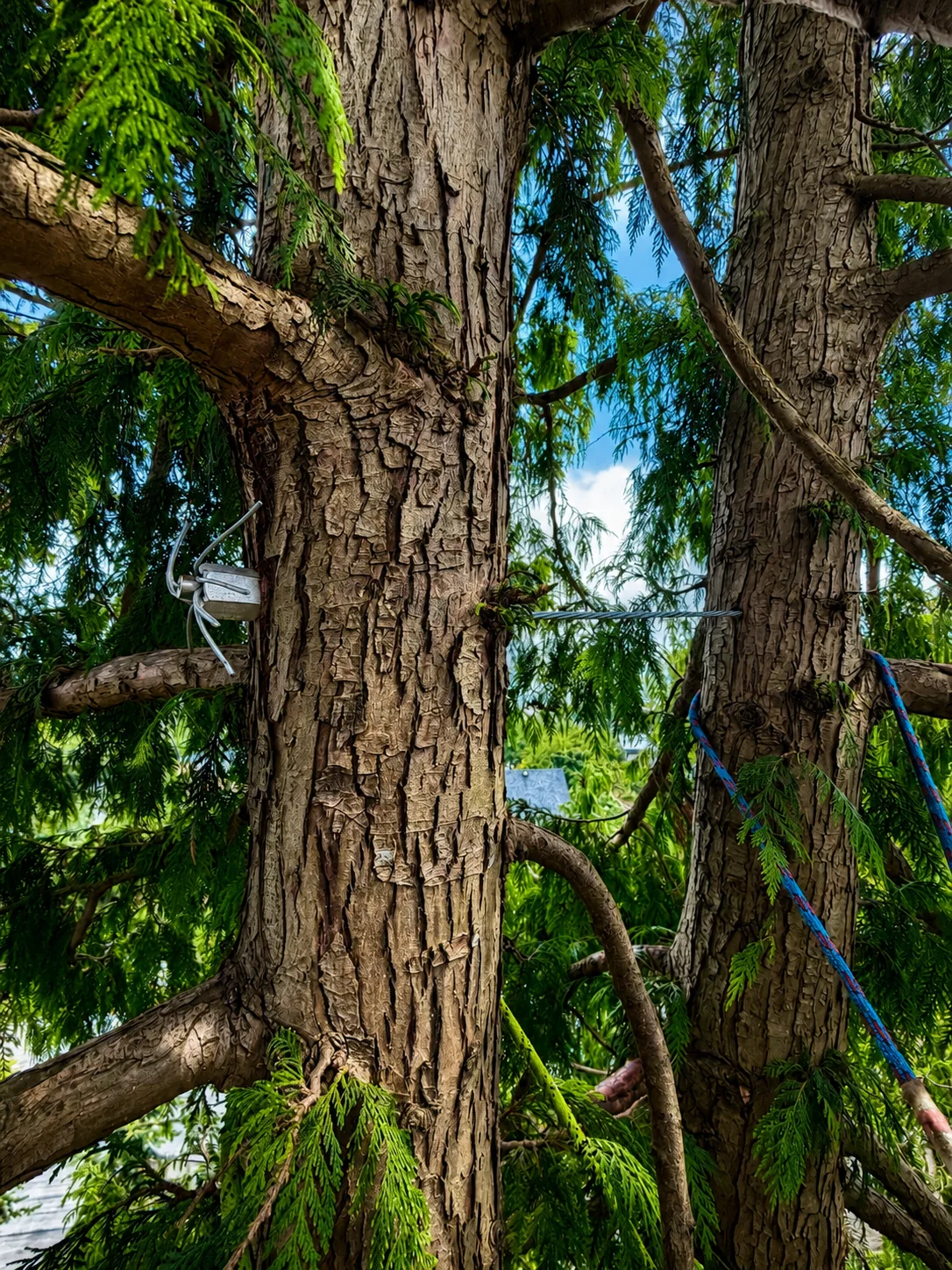
Existing tree cable in your Delta yard? Recover inspection records, report changes safely and agree on the next review before winter.
A tree cable can be easy to forget once it disappears among the branches. If you inherited a cabled tree with your Delta home, or cannot remember its last inspection, late autumn is a useful time to recover the records and arrange a review. Seeing a cable in place does not establish that the system—or the whole tree—is in suitable condition.
For homeowners in Ladner, Tsawwassen and North Delta, the question for the coming weeks is practical: who is responsible for checking this particular tree, what does the inspection include, and when should the next review happen? This is seasonal planning, not a report of current storm conditions.
Start with the tree's support history
Look for the installation invoice, previous arborist recommendations and any inspection notes already held with your property records. Identify which tree each document concerns. A garden with several large trees can have more than one support system, installed at different times for different reasons.
Record the last inspection date separately from the installation date. If records are missing, say that plainly when contacting Woodpro. An estimate from years ago does not show that the proposed work happened, and a completed installation does not establish when someone last examined it.
Our guide to cable bracing and retention decisions explains the broader question of whether support is appropriate. An existing system brings an additional task: maintaining continuity between the original purpose, subsequent inspections and today's condition.
Ask for a review of the tree as well as the cable
Support equipment addresses particular structural concerns. It does not make every part of a tree secure or remove the need to assess changes elsewhere.
UMass Extension's 2026 explanation of tree support systems emphasizes defining the objective before installation or maintenance and explaining the limits to the owner. It also explains that different support materials work differently. A metal cable and a synthetic system should not be judged by the same homeowner rule about how tight they look.
Ask the arborist to explain what the existing system was intended to support, whether that objective remains appropriate and what the proposed inspection can establish. Mention changes to the surroundings, such as a new seating area beneath the crown or a driveway now used daily. Those details help describe how people use the site.
Keep observations separate from hands-on testing
From a place you can safely remain, note anything that appears different: a line hanging lower than you remember, a detached-looking component or a newly broken branch. Describe what you see without deciding which part has failed. A photograph may help identify the tree and the concern, but cannot verify hardware condition.
Do not climb, use a ladder, pull on the cable or try to tighten, cut or remove it. Leave close inspection and any adjustment to a qualified arborist. Do not hang lights, decorations or other loads from tree-support equipment.
If a fresh crack, hanging branch or obvious change in the tree's position is present, keep people and pets away and describe that concern when seeking help. Do not treat it as a routine maintenance appointment simply because the tree already has support.
Agree on an inspection schedule you can actually follow
Ask for the next inspection date in writing and who will arrange it. Calendar reminders work best when they identify the tree, the contractor and where the last findings are stored.
Purdue Extension's Large Tree Cabling and Bracing guide recommends annual ground inspections and generally a closer inspection by an arborist ascending the tree every three years. These are useful questions to bring to the discussion, not a reason to postpone an overdue review or a substitute for advice about your particular system.
UMass Extension also identifies annual inspections and checks following severe weather as one possible approach. Ask your arborist what events should bring the next review forward and how those concerns should be reported. Do not enter an affected area to inspect it yourself.
Separate inspection findings from the work order
An inspection may lead to advice about continued use, further examination, maintenance or a different management approach. Ask what is recommended, why, and what remains uncertain before authorizing work.
Woodpro's tree cabling and structural support service includes reviewing existing systems. If a broader condition question needs attention, discuss the scope of a tree health assessment. Confirm whether the proposed visit includes a written record, closer access or any equipment work; these should not be assumed from the word “inspection.”
If pruning is recommended, ask which branches and objectives are included. Agree on access arrangements and full site cleanup for any resulting work, including whether removed wood will stay.
Keep the record with the property
After the visit, save the findings with a dated photograph identifying the tree and the next review date. If a property manager changes or the home is sold, pass those records on. The next person should be able to distinguish what was installed, what was inspected and what still needs doing.
Woodpro Tree Services Ltd provides fully insured tree care with ISA-certified arborists in Delta and Metro Vancouver. Request a free estimate, call 7787899452, or email info@woodpro.ca. Mention the existing cable and any missing records at the start so the enquiry reaches the right assessment discussion.