Home / Blog / Green Patches on Tree Bark in Delta: Does the Tree Need Work?
Tree Care
Green Patches on Tree Bark in Delta: Does the Tree Need Work?
Woodpro Tree Services Ltd · · 5 min read
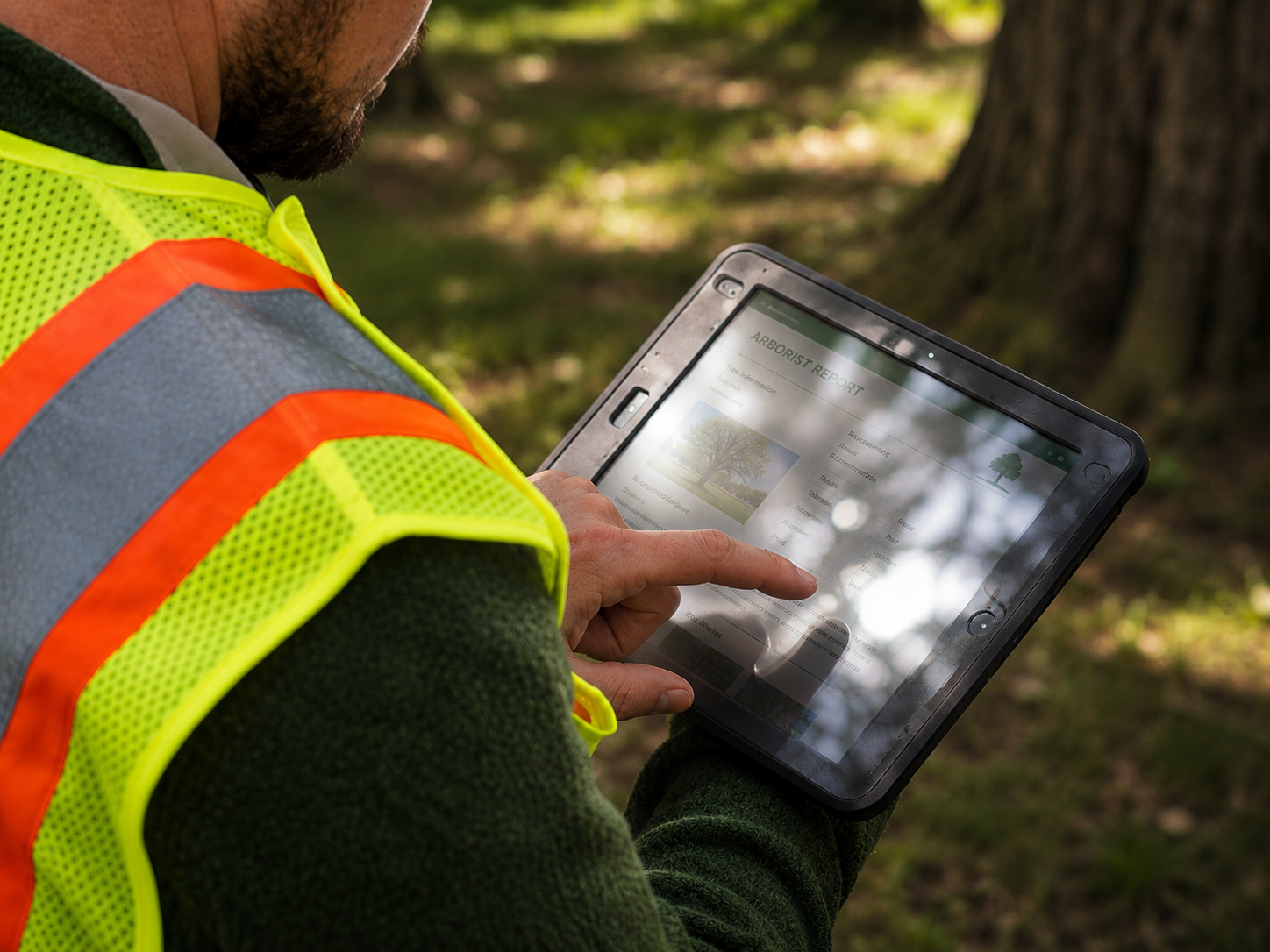
Green or grey bark patches do not automatically mean a tree needs treatment. Separate surface growth from other changes before asking about a report or tree work.
A green patch on a trunk can turn an ordinary look around the garden into a worrying question: is something attacking the tree?
For a Delta homeowner, the useful starting point is to describe the growth and the tree’s condition separately. A patch on bark does not, by itself, establish a need for treatment, pruning or removal. Equally, recognising harmless surface growth does not answer every question about the tree beneath it.
As deciduous trees lose leaves, you may notice parts of the trunk that were less visible earlier. Finding a patch now does not tell you when it first appeared.
Bark can support harmless surface growth
University of Maryland Extension explains that lichen, algae and moss can grow on tree bark without damaging the tree. Lichen use the surface as a place to live; their presence is not evidence that they are consuming the tree.
The same guidance makes an important distinction: lichen may occur on slow-growing or declining trees without causing that decline. The organisms and a separate tree problem can exist together. Removing the visible growth would not explain why the tree’s condition had changed. Read the Extension guidance on lichen, algae and moss.
That distinction helps frame the next conversation. “There is a patch on the trunk” and “this tree has changed since last year” are two observations worth describing individually.
Describe what you see before naming it
Start with plain language: where the patch is, how much of the visible trunk it covers and whether it looks flat, leafy or tufted. Record when you noticed it. If you do not know what it is, leave that question open.
Colour alone is not a reliable basis for deciding that every green or grey patch is lichen, moss or algae. An internet photograph that looks similar can help you form a question; it cannot establish the identity of growth on your tree.
If photographs can be taken from a safe position, include a view showing where the patch sits and a wider view of the tree. Avoid moving closer beneath damaged branches to improve a picture. There is no need to scrape bark or collect a sample before making an enquiry.
Keep changes in the tree in a separate note
Alongside the surface description, record any other concern that prompted you to look. Has part of the canopy become sparse? Have branches died? Is there a crack you had not seen before?
The International Society of Arboriculture identifies dead branches, cracks, cavities and fungal fruiting bodies among observations that warrant professional attention. Its guidance stresses that an arborist should evaluate the seriousness of defects. Read ISA’s Recognizing Tree Risk brochure.
For example, a homeowner might report grey patches that have been visible for years and a newly broken branch. The branch needs its own consideration; the patches do not explain it. Another owner may have noticed surface growth without any known change elsewhere. Those enquiries should not begin with the same assumed diagnosis.
A mushroom or bracket needs its own description
Keep mushrooms or shelf-like brackets on the trunk or around the base distinct from a general description of green bark. ISA includes fungal fruiting bodies among possible external signs of decay.
Do not apply reassurance about lichen to an unidentified mushroom or bracket. Likewise, the word “fungus” does not make every organism on bark a wood-decay problem.
Tell the person reviewing your enquiry which features you mean. If you have several photographs, label them by location rather than assigning a disease name. That makes it easier to discuss separate observations without combining them into a single assumed cause.
Let the question determine the work
When the concern is identified lichen, algae or moss alone, the Extension guidance says control is unnecessary. A cleaner-looking trunk is not a reason to assume tree work is needed.
If there is an independent concern, ask what review would help clarify it. Woodpro’s current services include an Arborist report. Ask whether a written report is suitable for your question and agree on its scope before booking.
If a separate pruning need is established, discuss that need through tree trimming and pruning. Describe the branch concern or desired outcome rather than requesting pruning simply because the bark has patches.
Bring Woodpro a clear account of the concern
Send your location, the photographs you can safely obtain, when you first noticed the growth and any separate changes in the tree. Say whether you want help deciding if a report is appropriate or already have a specific tree-work request.
If a branch is hanging or the tree appears unstable, stay clear and seek prompt professional assistance rather than approaching for photographs.
Contact Woodpro about your tree. A clear description of the surface growth and any independent concern gives the conversation a useful starting point.